

Nigeria's remarkable new West African Art Museum (Mowaa) has landed in the center of local power politics during the week it was scheduled to – but did not manage – to open its doors to the public for the very first time.
The Grand Vision
The six-hectare campus is located in the core of Benin City, capital of the southern state of Edo – and contains an historical dig and facilities designed by high-profile Ghanaian-British architect Sir David Adjaye, most famous for the National Museum of African American History and Culture that began operations in the US capital in 2016.
It has been 60 months in the creation – and is planned to celebrate both the heritage and the current era of cultural innovation in the region renowned for the Benin Bronzes, artworks stolen from the king's palace by British soldiers in the 1800s.
Readiness and Potential
It is impressive – and before the anticipated opening, Mowaa was buzzing with workers committed to prove it is a venue that can rival well-known cultural centers in the Europe and America.
Within preservation experts carefully revealed art pieces from secure wrapping, inspecting each artifact and taking detailed documentation before placing them on exhibition areas and plinths.
Experts fine-tuned temperature regulation systems. In the materials science laboratory, officers set up devices designed to maintain centuries-old artefacts.
Financial Backing and Economic Vision
The initiative has been the concept of entrepreneur Phillip Ihenacho – presently Mowaa's executive director.
"I want us to have a substantial financial effect on area populations around here," he stated to media outlets, mentioning that he wanted to make this urban center "a tourism center."
Mowaa, a charitable national foundation, aims at generating over 30,000 work positions and adding above $80m annually to the regional creative economy through collaborations and events.
Financial Support and Government Issues
It has required $25m to achieve this stage – funds collected from various contributors, including the French and German governments, the London institution and the local administration.
But currently the local government has withdrawn support from beneath it – revoking the use of the land on which the facility was constructed.
An government communicator clarified this was because in the early agreements it had called itself Edo Museum of West African Art – and it had subsequently removed "the state identifier" from its title.
Protests and Political Intervention
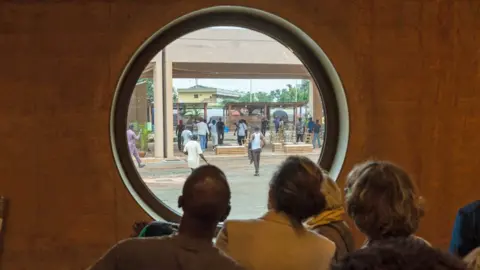
This declaration was preceded by protests on the weekend, when protesters stormed the complex insisting it be designated the Museum of the Benin Kingdom.
A rowdy crowd insulted overseas dignitaries at the venue prior to the launch – compelling them to be quickly removed under police escort.
Head of state Bola Tinubu has even stepped in to work to address the conflict, establishing a presidential committee to manage the situation.
Governance Issues
But how has this turned into so divisive – and such a public relations crisis?
Much of it results from local power struggles at a local state level, as it was Edo's previous governor Godwin Obaseki – whose term in office finished recently – who was a major backer of the project.
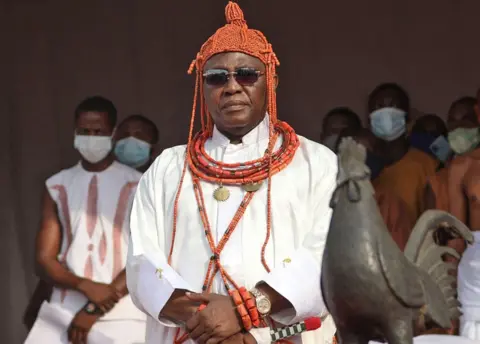
And it seems the leadership of the recently elected official, a key associate of the regional monarch, known as the traditional leader, may desire greater involvement in the project. The activists on Sunday, for case, were demanding that the facility be positioned under the authority of Oba Ewuare II.
The Historical Objects Discussion
This highlights the disputed topic of the cultural artifacts, one of Africa's most famous cultural treasures.
Because even if the institution does finally begin operations, these objects will be noticeably missing.
They are brass, ivory and wooden carvings that once decorated the monarch's home of the historical empire before UK forces took them in the colonial era during a punitive expedition.
Currently, numerous continue to be distributed across galleries in the West -- such as the UK institution, European center and the American museum.
Repatriation Campaigns
Their return has become one of the most disputed debates in the international art community. Roughly 150 have currently come back – and further are scheduled to be repatriated.
When plans for the museum in the urban center were initially revealed in the pre-pandemic era, the movers and shakers on the country's cultural sector hoped it would become their perfect venue – a state-of-the-art complex to display them to the world.
But the situation became complicated some time back after the federal government stated that the royal leader would be the rightful owner of repatriated artifacts – and the monarch's court advocated for a museum under the monarch's supervision, opposing the preferences of the ex-leader.
Diplomatic Challenges
This placed Mowaa in a difficult situation: maintaining a clear stance on return while staying tactful on guardianship – and highlighting its broader vision, which led to|c


